
A short book about pleasure, access, and the quiet architecture of loneliness.
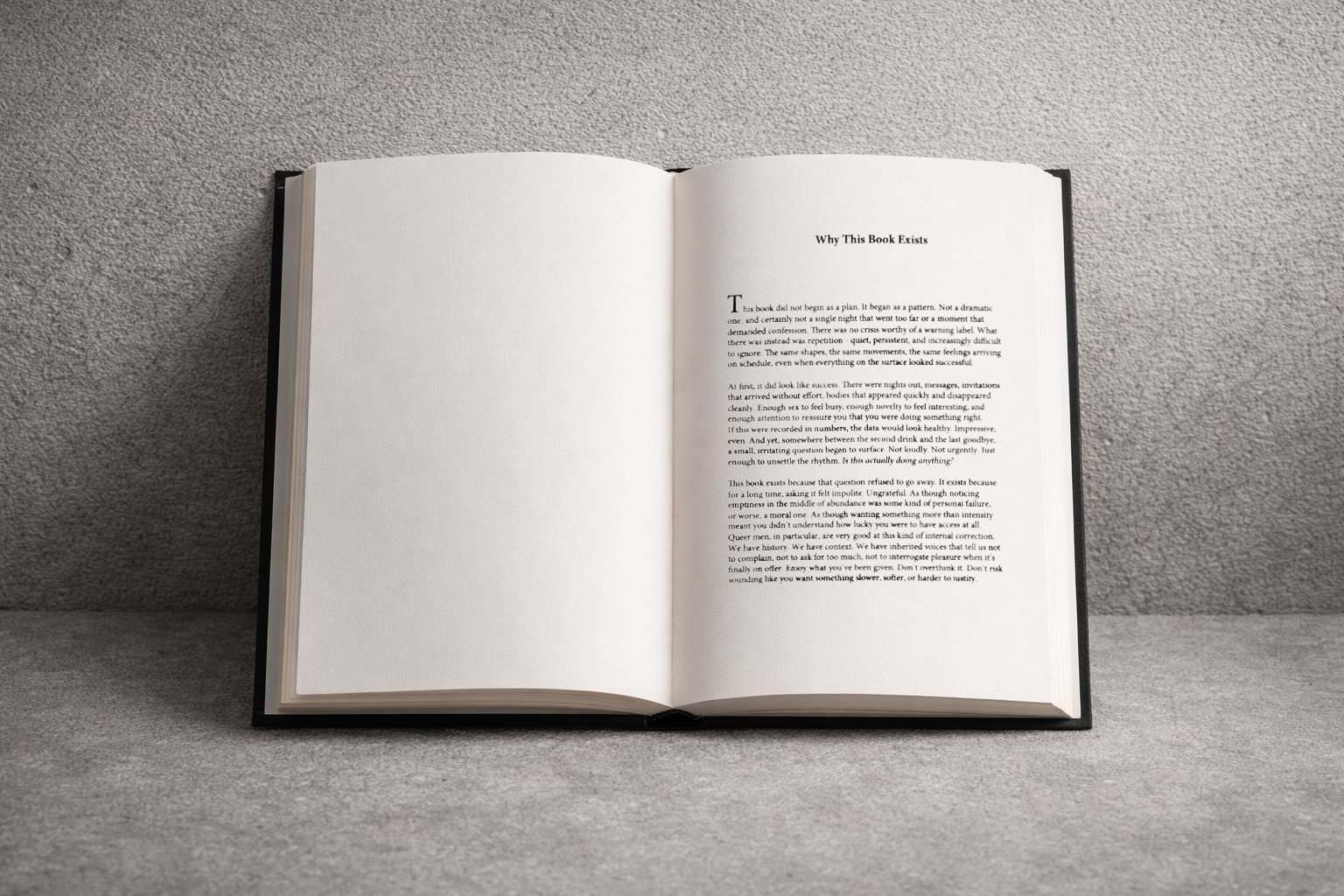
Moving through apps, nights out, and chemsex-adjacent spaces, the book observes what happens when intimacy becomes efficient and connection becomes abundant. Nothing collapses. Nothing dramatic happens. Instead, something slower appears: repetition, quiet exhaustion, and the strange feeling that a life can look full while gradually draining.
This is not a memoir and not a warning. It does not offer solutions or moral clarity. It simply traces patterns - psychological, social, and technological - that shape how intimacy is experienced in a world where connection is always available.
At its centre is a simple question:
what happens when everything works?
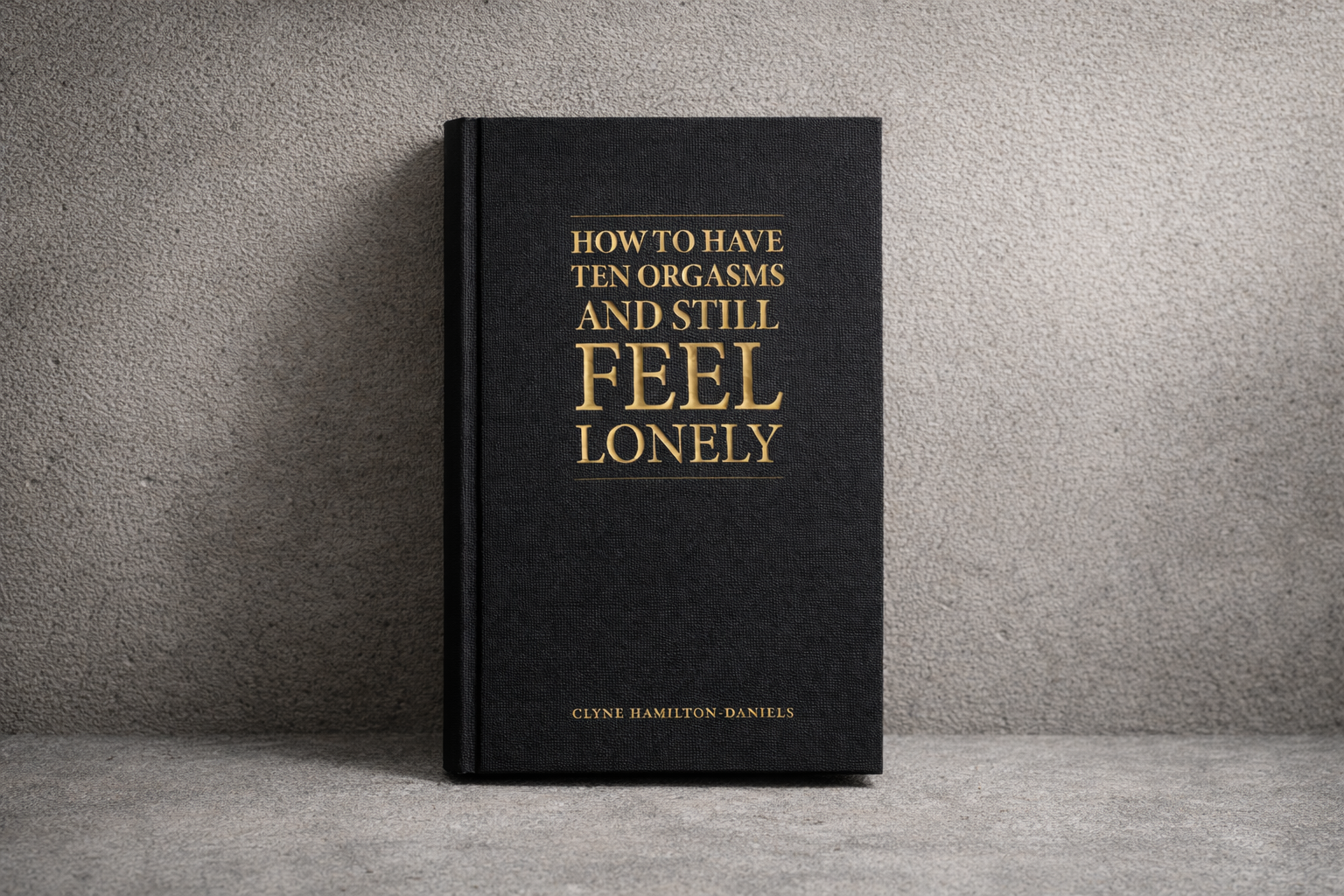
Written with restraint and clarity, How To Have Ten Orgasms And Still Feel Lonely sits between personal reflection and cultural observation, examining pleasure, loneliness, and the structures that quietly organise modern intimacy.
A short book about pleasure, access, and the quiet architecture of loneliness.
Moving through apps, nights out, and chemsex-adjacent spaces, the book observes what happens when intimacy becomes efficient and connection becomes abundant. Nothing collapses. Nothing dramatic happens. Instead, something slower appears: repetition, quiet exhaustion, and the strange feeling that a life can look full while gradually draining.
This is not a memoir and not a warning. It does not offer solutions or moral clarity. It simply traces patterns - psychological, social, and technological - that shape how intimacy is experienced in a world where connection is always available.
At its centre is a simple question:
what happens when everything works?
Written with restraint and clarity, How To Have Ten Orgasms And Still Feel Lonely sits between personal reflection and cultural observation, examining pleasure, loneliness, and the structures that quietly organise modern intimacy.