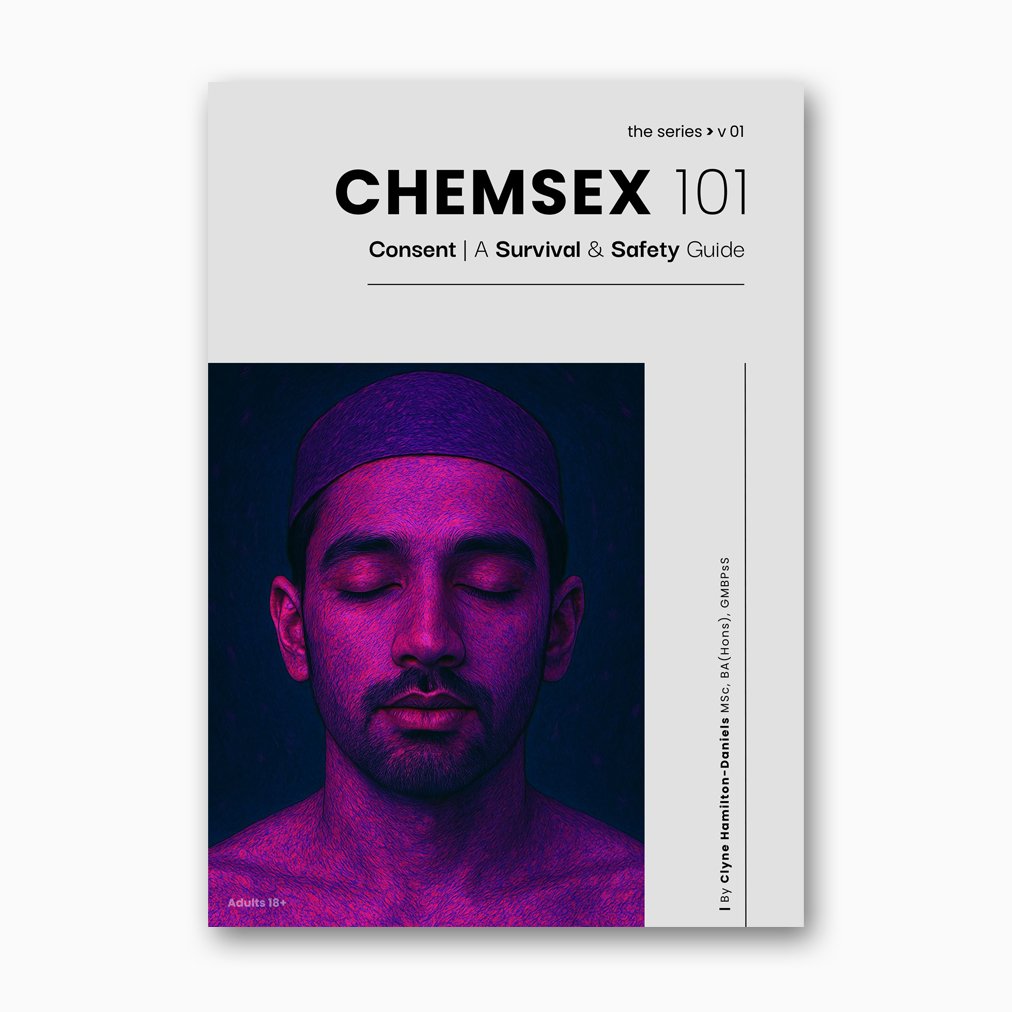
CHEMSEX 101 – Consent | A Survival & Safety Guide (Printed Edition) is a clear, non-judgemental harm-reduction guide for navigating consent, boundaries, capacity, and care in chemsex contexts - without blame, panic, or moralising.
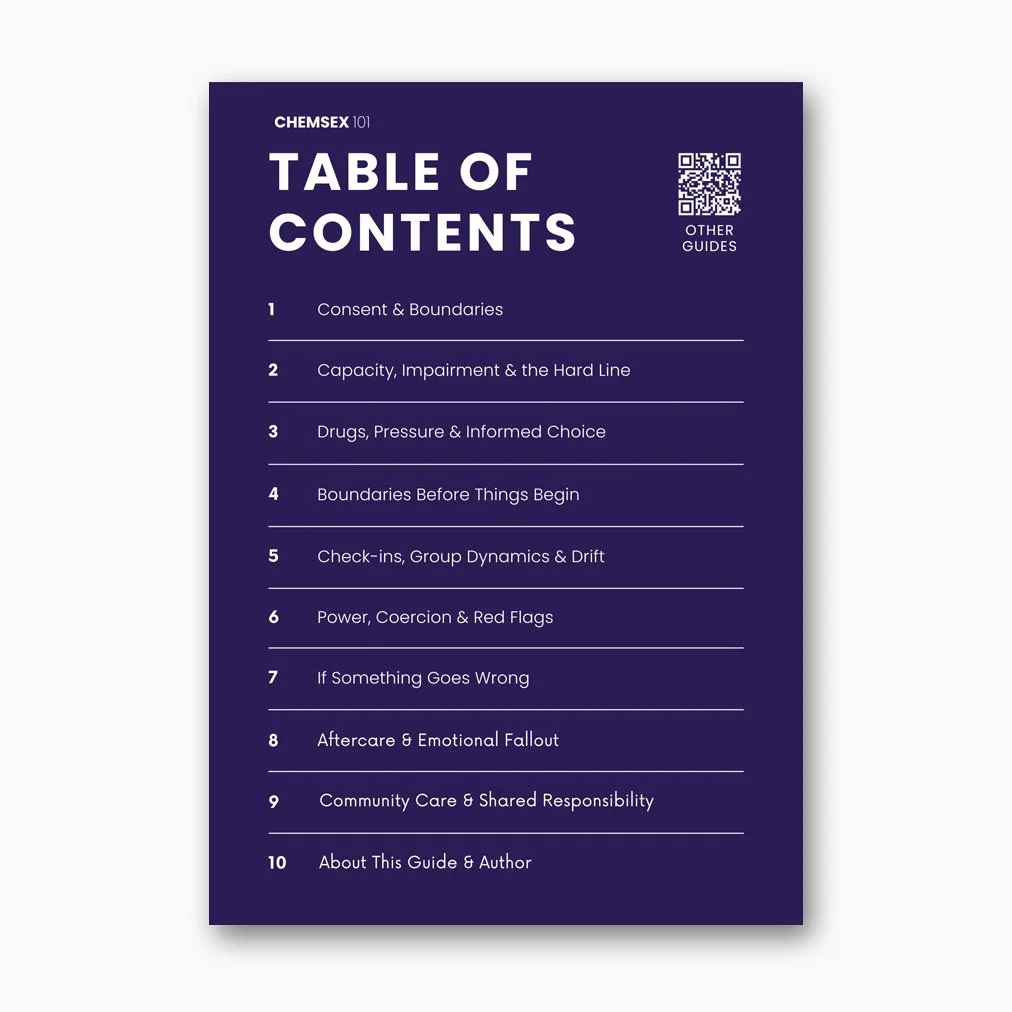
Across 20 pages of grounded, practical guidance, this resource explores:
What consent means in chemsex - psychologically, socially, and ethically
How drugs, fatigue, power, and group dynamics affect capacity and choice
The difference between consent, compliance, and care
Capacity, impairment, and the “hard line” where consent cannot exist
Drugs, pressure, and informed choice before sex begins
Setting boundaries in advance - and why this protects pleasure
Check-ins, momentum, and group dynamics over long sessions
Power, coercion, and red flags that are often missed in altered states
What to do if something feels wrong - even without certainty or memory
Aftercare, emotional fallout, and nervous-system repair
Community care, shared responsibility, and safer chemsex cultures
Written by a queer harm-reduction healthcare worker and evidence-informed researcher, this guide blends clinical insight, lived experience, and community knowledge to meet consent as it actually unfolds in chemsex — not as a simple yes/no rule, but as an ongoing, relational process shaped by drugs, context, and power.
Whether you’re:
Navigating consent in chemsex for the first time
Trying to understand a confusing or uncomfortable experience
Supporting a partner, friend, or community member
Hosting, attending, or facilitating group chemsex spaces
Working in healthcare, sexual health, outreach, or community support
…this guide offers what many services still don’t: clear, affirming, shame-free guidance that centres dignity, safety, and autonomy - without criminalisation or fear.
Disclaimer: The Chemsex 101 series are an evidence-informed harm-reduction guide for education and support, not a medical guideline or substitute for individual clinical advice. Drug effects and risks vary between people and batches; always seek professional medical help if you’re unsure or in an emergency. The author takes no responsibility for actions taken based on this or any other guides.
CHEMSEX 101 – Consent | A Survival & Safety Guide (Printed Edition) is a clear, non-judgemental harm-reduction guide for navigating consent, boundaries, capacity, and care in chemsex contexts - without blame, panic, or moralising.
Across 20 pages of grounded, practical guidance, this resource explores:
What consent means in chemsex - psychologically, socially, and ethically
How drugs, fatigue, power, and group dynamics affect capacity and choice
The difference between consent, compliance, and care
Capacity, impairment, and the “hard line” where consent cannot exist
Drugs, pressure, and informed choice before sex begins
Setting boundaries in advance - and why this protects pleasure
Check-ins, momentum, and group dynamics over long sessions
Power, coercion, and red flags that are often missed in altered states
What to do if something feels wrong - even without certainty or memory
Aftercare, emotional fallout, and nervous-system repair
Community care, shared responsibility, and safer chemsex cultures
Written by a queer harm-reduction healthcare worker and evidence-informed researcher, this guide blends clinical insight, lived experience, and community knowledge to meet consent as it actually unfolds in chemsex — not as a simple yes/no rule, but as an ongoing, relational process shaped by drugs, context, and power.
Whether you’re:
Navigating consent in chemsex for the first time
Trying to understand a confusing or uncomfortable experience
Supporting a partner, friend, or community member
Hosting, attending, or facilitating group chemsex spaces
Working in healthcare, sexual health, outreach, or community support
…this guide offers what many services still don’t: clear, affirming, shame-free guidance that centres dignity, safety, and autonomy - without criminalisation or fear.
Disclaimer: The Chemsex 101 series are an evidence-informed harm-reduction guide for education and support, not a medical guideline or substitute for individual clinical advice. Drug effects and risks vary between people and batches; always seek professional medical help if you’re unsure or in an emergency. The author takes no responsibility for actions taken based on this or any other guides.